The Future of Translation: The Profession Twenty Years From Now
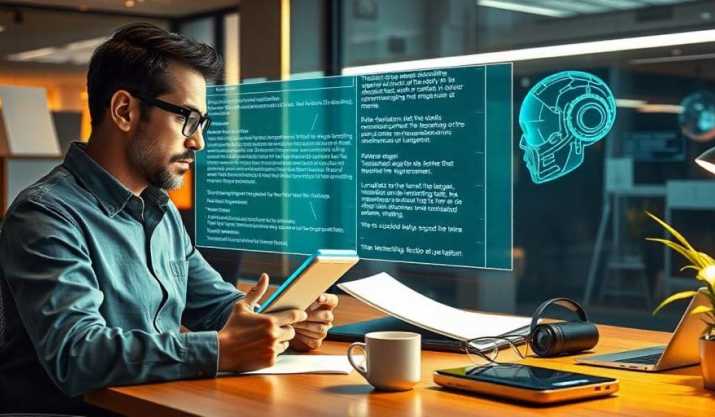
Just a few years ago, few could have imagined that artificial intelligence would start competing with humans in a field once ruled entirely by professional translators. But reality is catching up with fiction: software is getting smarter, databases deeper, and the translation market more high‑tech. Let’s try to picture what the translator’s profession will look like twenty years from now and what will define success in it.
Technology: Not an Enemy, but a Tool
When machine translation began developing rapidly, many specialists felt uneasy. It seemed as if algorithms were about to replace humans. Yet experience shows the opposite: technology doesn’t kill the profession, it makes it richer. Translators are evolving from executors into analysts, editors, consultants. Automatic translation systems handle routine tasks — draft versions, terminology searches, text alignment. The human translator ensures nuance, tone, and cultural fit.
In twenty years, professional translation will most likely rely on a symbiosis of humans and artificial intelligence. Tools will respond to tasks far more precisely. A translator will be able to “train” a neural network for a specific client — corporate style, speech tempo, emotional tone. The machine will deliver speed, while the human preserves meaning.
The Translator of the Future: Who Will They Be?
Today, knowing two languages and basic terminology might be enough, but in the future, the list of requirements will expand. The professional translator will combine the skills of a linguist, editor, and technologist. Working with big data, mastering localization tools, and understanding marketing strategies will all become part of the job.
Even now, translators working in IT or medicine don’t just render texts — they help adjust products for specific markets. Localizing mobile apps or medical interfaces means not only finding the right words but creating an experience that feels natural and trustworthy. Soon the line between “language service” and “communication consultancy” will disappear completely.
New Niches for Translators
Global communication volumes will multiply over the next two decades. Online courses, educational platforms, interactive films, virtual and augmented reality — all will require localization. Companies already realize that automatic translation can render words, but not atmosphere.
For example, an international game studio releasing a new video game could have instant machine translation for menus, yet only a human translator can tell which jokes will sound natural and which should be neutralized. The same applies to education projects: translators become bridges between different mental models rather than mere text processors.
The adaptation of content for voice and visual interfaces is also emerging as a major field. Future translators will specialize in multimodal translation — across audio, visuals, and augmented reality. This will open career paths we can hardly imagine today.
Global Market and Competition
The professional translation market has been global for years, but competition will become even sharper. Clients will be able to hire specialists anywhere, instantly. This means quality and a unique professional approach will matter more than a person’s location or rate.
Trust will also remain central. Despite growing automation, clients still value human interaction. Teamwork, consultation, personal accountability — these are things no algorithm can mimic. The translator of the future will not just perform tasks but build long‑term professional relationships, combining linguistic precision with client insight.
Challenges of Translation: Old Topic, New Focus
Even twenty years from now, there will be texts no algorithm can manage. Literary works, marketing slogans, legal formulations — everything that depends on subtext, cultural codes, and psychology. These “translation challenges” will only raise the value of professional translators.
At the same time, new technology will drastically reduce mechanical errors and shorten project times. The translator won’t disappear but evolve into a strategic specialist — someone who manages translation processes rather than merely edits machine output.
How Translator Education Will Change
Training systems will also transform. Translation departments and private courses are already introducing subjects on AI tools, translation memory systems, and localization software. Twenty years from now, study programs will be flexible and project‑oriented. Students will work with real‑world projects early on, preparing them to adapt quickly to market shifts.
We may even see a new professional title emerge — “digital language mediator,” an expert linking translation, communication, and data analysis. Their responsibility: to design understanding between humans and systems.
The Future of Localization
As text translation becomes mostly automated, localization will turn into an art form. Companies will need specialists who truly understand culture, humor, traditions, and visual cues. Professional translation in this area will resemble stage direction — what matters isn’t just what is said, but how it’s perceived.
For example, when brands expand into new markets, they’ll look for translators who can adapt not only the language but the entire concept behind a product. This demands deep knowledge of the audience — something no neural network genuinely feels.
Conclusion: Humanity at the Center
The translator’s profession is transforming, not disappearing. It’s becoming more complex, dynamic, and creative. In twenty years, successful translators will not simply master languages but also manage technology, understand communication psychology, and preserve the human pulse of every text.
For those just entering the field, the key is not to fear change — but to harness it. Learn new tools, explore different industries, stay adaptable. Professional translation will remain in demand because bridging meaning between cultures is one of humanity’s most essential skills, and no machine can truly replicate it.