ChatGPT and AI in Translation: Assistant or Competitor to Humans?
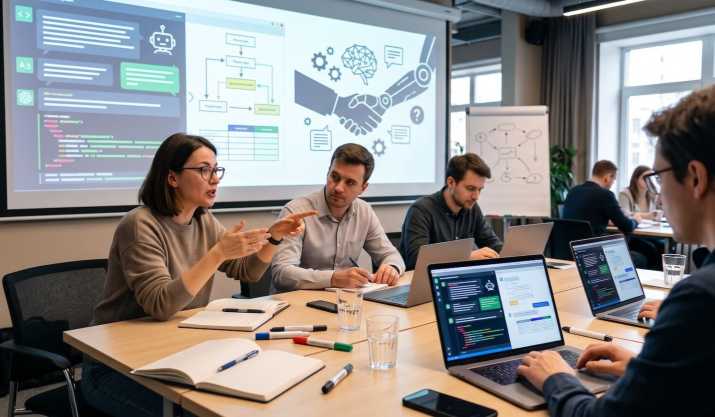
When large language models first demonstrated the ability to express thoughts coherently and accurately across dozens of world languages, the media landscape was instantly flooded with sensational predictions about the imminent demise of the translation profession. Numerous enthusiasts predicted that within just a couple of years digital algorithms would permanently replace human linguists, while skeptics warned against trusting generative systems even with the translation of a simple weather forecast. A little time has passed, the initial emotional hype has settled, and the expert community has entered a period of sober, practical assessment of the actual capabilities of neural networks. Today, it has become abundantly clear that the advent of large language models did not destroy the industry, but radically reshaped established workflows. In this article, we examine in detail how ChatGPT is used in translation, the practical tasks in which artificial intelligence demonstrates impressive success, where its insurmountable limits lie, and why human-assisted professional translation remains the ultimate benchmark of quality.
From Mechanical Matching to Flexible Dialogue
To fully appreciate the scale of these changes, it is useful to recall the fundamental operating principles of classic machine translation. Traditional neural systems of the previous generation, such as Google Translate or DeepL, were created solely to solve one specific task: taking a source segment of text and generating the statistically most probable equivalent in the target language. They handle standard, formulaic constructions exceptionally well, but they function as closed black boxes. You cannot ask a classic service to rewrite a paragraph with more irony, switch a form of address to an emphatically respectful tone, or adapt terminology for a child audience.
Large language models have radically changed the rules of the game. Modern conversational systems, such as ChatGPT, Claude, or Gemini, do not simply translate isolated sentences; they engage in meaningful, contextual dialogue with the user. Thanks to advanced prompt-engineering capabilities, a practicing translator can set the exact tone of the narrative, specify the desired stylistic register, define the target audience profile, and upload a detailed terminology glossary directly into the prompt. If the resulting output feels too dry or overly academic, a brief follow-up instruction is all it takes for the system to instantly rephrase the statement while preserving the key semantic nuances. It is precisely this exceptional flexibility that makes ChatGPT so effective in translating non-standard and creative texts.
Transcreation, Adaptation, and Creative Potential
The primary realm of undisputed triumph for generative models has been deep creative content adaptation, known in professional circles as transcreation. For decades, traditional translation algorithms stumbled over complex metaphors, wordplay, poetic rhymes, and cultural humor. Generative artificial intelligence is capable of instantly producing dozens of alternative versions for a single advertising headline, selecting expressive imagery tailored to the cultural specifics of a particular target market.
If a specialist is tasked with adapting a large-scale advertising campaign for a youth apparel brand, the language model can easily offer options in contemporary urban slang. If an author needs to stylize a historical novel to reflect the Victorian era or nineteenth-century business correspondence, the algorithm successfully selects authentic archaic phrasing. Furthermore, by employing ChatGPT in translating large volumes of information, specialists can quickly extract industry terminology, build bilingual glossaries, identify contextual synonyms, and find inspiration when seeking unconventional lexical solutions.
Dangerous Illusions: Hallucinations and Lack of Accountability
However, genuine admiration for technological progress must not obscure the fundamental vulnerabilities of generative neural networks. The primary danger of language models lies in their absolute, unwavering confidence, even when generating completely inaccurate information. In professional linguistic circles, this phenomenon is known as hallucination. A model can produce grammatically flawless, stylistically polished, and persuasive text that subtly distorts a key fact, drops a negation, or mixes up the name of a party in a legal proceeding.
Distinct translation challenges arise when processing highly specialized texts: corporate contracts, financial statements, patent applications, and clinical trial protocols. Generative systems lack human consciousness, logical reasoning, and real-world experience; they merely compute the probability of subsequent words. A service can easily replace a precise legal term with a colloquial synonym or misstate the dosage of an active ingredient in a medical package insert, thereby creating severe translation challenges for the end user.
An equally significant limitation is of a legal and ethical nature. Contemporary artificial intelligence bears no legal or moral responsibility for semantic errors made. A neural network cannot be held liable for a collapsed foreign trade contract, and machine-generated text cannot be notarized or apostilled. When patient health, corporate reputation, or multi-million-dollar financial assets are on the line, only professional translation by a certified human expert protects a business from unforeseen catastrophic consequences.
Transformation of the Profession: From Typesetter to Cultural Curator
The emergence of advanced generative algorithms does not render humans obsolete, but it places fundamentally new demands on their level of professional training. The mechanical, line-by-line transfer of words from one dictionary to another is fading into the past, giving way to sophisticated interdisciplinary expertise. Today, a qualified translator acts simultaneously as a thoughtful editor, a rigorous fact-checker, a skilled prompt engineer, and a cultural curator for the project.
An experienced linguist uses digital tools to automate routine tasks, analyze context quickly, and perform initial drafting. At the same time, the human takes on the most responsible part of the work: fact-checking, evaluating subtle emotional connotations, maintaining terminological rigor, and providing the final stylistic polish. A professional translator sees hidden subtexts, understands unstated motives of the parties involved, and senses emotional nuances in speech that remain fundamentally out of reach for semiconductor processors. It is precisely this human perspective that enables the successful resolution of any translation challenges in non-standard situations.
Practical Advice for Clients and Specialists
To apply innovative tools effectively and guarantee a reliable outcome, it is essential to maintain a sensible balance between automation and expert human labor. Clients of translation services should clearly categorize their tasks by level of responsibility. If you need a fast rough translation of an incoming email or a short message to understand the general gist, generative artificial intelligence serves as a convenient, fast, and practical assistant.
However, when it comes to presenting a company in foreign markets, localizing a commercial website, signing international contracts, or publishing scientific research, the only dependable choice remains professional translation delivered by specialized experts. Do not hesitate to discuss with service providers how their workflows are structured and what multi-stage quality control methods they employ.
For emerging specialists, it is important not to fear competition from neural networks, but rather to actively study the principles of prompt engineering and broaden personal erudition. Remember that a qualified translator who masterfully leverages artificial intelligence will always stay one step ahead of those who ignore the evolution of tools. The judicious combination of human talent and computational power defines the future of global communication.