False Friends of the Translator: Deceptive Words and Common Pitfalls
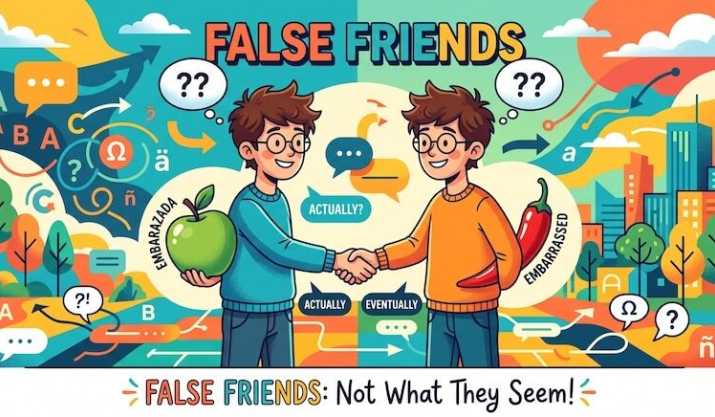
Every one of us has been tricked at least once by the external similarity of words in different languages. You see a familiar root, confidently use the word in speech or an official document, and in response you get bewildered glances, financial losses, or even a reputation scandal. In linguistics, this phenomenon is called interlingual homonyms, while in the professional community, the metaphorical term false friends of the translator has taken root. At first glance, they seem like harmless coincidences, but in real practice, they can disrupt international negotiations, ruin an advertising campaign, or turn into a lawsuit. In this article, we will analyze in detail how these deceptive words arise, what mishaps they lead to, and why professional translation requires utmost vigilance from a specialist.
Traps of External Similarity and Classic Examples
The main danger hidden in false friends of the translator lies in their psychological hypnotism. The human brain naturally looks for familiar patterns and strives to save intellectual effort. When a novice specialist encounters the word accurate in an English text, their hand is tempted to automatically translate it as neat or tidy. However, in reality, this word means precise, correct, or reliable. An error in a financial report, construction estimate, or equipment drawing due to such confusion can have devastating consequences for a business.
Another classic example is the word magazine, which has nothing to do with retail trade and translates as journal or periodical. If in a business letter you write about a visit to a store using the word magazine, a foreign partner will assume you are referring to a publication in the press. No less treacherous is the word complexion. In Russian, complexion is associated exclusively with a person's physique, but in English, this word means facial complexion or skin condition. If a translator describes a businessman's physique using this word, an English-speaking reader will only learn about his skin condition and tan.
Everyday and Medical Mishaps
Interlingual homonyms pose a particular danger in medicine and pharmaceuticals, where the cost of any error is immeasurably high. The word angina in English denotes angina pectoris, a severe cardiovascular disease. In Russian, however, angina traditionally refers to acute tonsillitis. Imagine the complexities of translating a medical history if an inexperienced interpreter confuses these concepts: a patient with a simple sore throat suddenly receives a diagnosis related to ischemic heart disease in their documents.
In the realm of human relationships, the word sympathetic causes much confusion. Remember: it translates as compassionate, responsive, or caring, but not at all as attractive or nice. If you want to say that a person is physically attractive, you should use the words charming or attractive. And the phrase sympathetic listener translates as an empathetic listener, not a handsome listener. Such subtle nuances shape the correct perception of the text and demonstrate a specialist's true level of mastery.
Culinary, Everyday Life, and Borrowed Terms
Deceptive words await us even in the most mundane situations. Being in a restaurant abroad, one can be very surprised studying the menu. For example, the English word chef means exclusively head cook, not a boss or head of an enterprise. To designate the leader of a company, the words boss, manager, or chief are used. In turn, the word artist designates a painter or visual artist, not a stage performer, for which there are words like performer or entertainer.
Many also get confused when translating the word prospect. In Russian, prospect is associated with a wide city avenue. However, in English, this word means future prospects or a potential client. Another interesting example is the word silicon, which translates as the chemical element silicon, while silicone for everyday needs is written as silicone in English. Because of this small letter, Silicon Valley in the US was erroneously called Silicone Valley in the domestic press for a long time.
Mishaps in Commercial Localization and Marketing
When a company enters the international market, product localization requires deep immersion in the linguacultural context. Business history knows dozens of anecdotal and expensive mistakes. A well-known case involves a major goods manufacturer trying to promote a brand in the Latin American market named with a word that had a double meaning or slang connotation in the local dialect.
In international contracts, the word obligation can play a fatal role. In some Romance languages, similar-sounding words denote not just an abstract obligation, but a specific type of security—bonds. If the written translation of a legal contract is performed without taking legal realities into account, the parties may interpret their financial obligations in completely different ways, leading to lawsuits.
Diplomacy and Jurisprudence Under Threat
In the history of international diplomacy, errors due to deceptive words have repeatedly caused serious political tension. A classic historical example is the French verb demander, which translates as to ask or request. During 19th-century diplomatic negotiations between France and the US, a French official note containing the words La France demande was translated into English as France demands. The American side viewed this tone as an ultimatum, and negotiations nearly collapsed until an experienced qualified diplomatic translator intervened.
In international law, the English word paragraph is treacherous. In Russian, a paragraph is an independent structured section of a document. In English legal and general contexts, paragraph means a simple paragraph of text. An error in referencing a specific paragraph of an agreement can completely alter the legal force of the agreement and confuse an international arbitration court.
Why Machine Translation Fails with Deceptive Words
Some clients mistakenly believe that modern neural translation services can automatically solve the problem of false cognates. However, algorithms are trained on massive statistical corpora and often choose the most frequent or superficial option. A machine lacks background knowledge of the subject matter and cannot feel the stylistic context.
That is why high-quality professional translation remains an exclusively human task. A specialist does not simply replace words from one language with words from another, but deeply analyzes the author's intent, the subject area, and the target audience's characteristics. When complex software localization or marketing material adaptation is performed, an editor manually verifies every terminological unit, eliminating any ambiguity.
Practical Advice for Working with Deceptive Words
To protect yourself and your projects from annoying linguistic mishaps, follow a few simple rules. First, never trust your initial intuitive impulse if a word looks perfectly familiar in an unfamiliar context. Always double-check the meaning in explanatory and bilingual specialized dictionaries.
Second, regularly compile and maintain corporate glossaries. For companies working with foreign partners, having an approved terminology base is a guarantee of consistency across all documents. Third, involve experts in your work. Any translation complexities are resolved faster and more reliably when handled by a team of professionals who master not only the language, but also the specifics of your industry. Remember that investing in competent translation is a direct contribution to the safety of your reputation and successful growth in the global market.